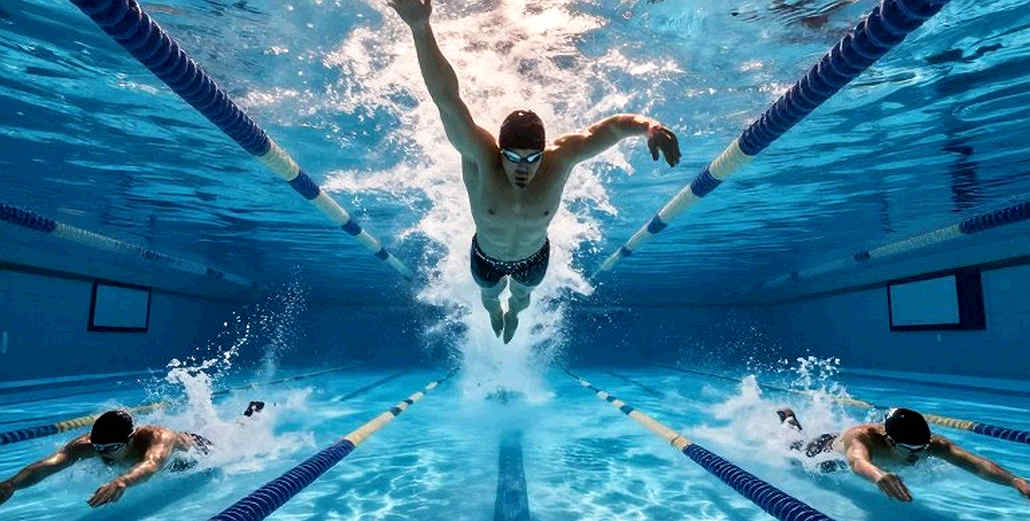
The 0.11-Second Line: Tatjana Smith in Short Course and South Africa's Single Faith
**মূল উত্তর:** তাতিয়ানা স্মিথ (২৯) ২০২৬ দক্ষিণ আফ্রিকা শর্ট কোর্স চ্যাম্পিয়নশিপে ১০০ মিটার ব্রেস্টস্ট্রোকে ১:০৪.০০ সময় করেন, যা তাঁর ২০২০ সালের জাতীয় রেকর্ড ১:০৩.৮৯ থেকে ০.১১ সেকেন্ড পিছিয়ে। স্প্লিট ৩০.০৯/৩৩.৯১, অর্থাৎ পজিটিভ স্প্লিট। শর্ট কোর্স সময় লং কোর্সের প্রমাণ নয়, তাই ২০০ মিটার ব্রেস্টস্ট্রোকই আসল পরীক্ষা। **মূল তথ্য:** - স্মিথের SCM ১০০ ব্রেস্টস্ট্রোক: ১:০৪.০০; জাতীয় রেকর্ড ১:০৩.৮৯ (২০২০), ফারাক ০.১১ সেকেন্ড। - স্প্লিট ৩০.০৯ (প্রথম ৫০) এবং ৩৩.৯১ (শেষ ৫০); ফেড প্রায় ৩.৮২ সেকেন্ড। - ৫০ মিটার ব্রেস্টস্ট্রোকে ব্যক্তিগত সেরা ২৯.৫০, অর্জিত ২৯ বছর বয়সে। - ১৭ বছরের চ্যানেল ভেল্ডসম্যান দ্বিতীয়, ১:০৭.৯৭ — ঘরোয়া ফারাক প্রায় ৩.৯৭ সেকেন্ড। - মাইকেল হুলির দাবিকৃত ৫৭.৩০ ব্যক্তিগত সেরা সন্দেহজনক; সম্ভবত শর্ট ও লং কোর্সের মিশ্রণ। **সূত্র:** দক্ষিণ আফ্রিকা শর্ট কোর্স চ্যাম্পিয়নশিপ ফলাফল ও Stage-2 গভীর বিশ্লেষণ প্রতিবেদন; তারিখ যাচাইসাপেক্ষ (সাঁতার ইভেন্ট, cricsultan.com ডেটাবেসে ক্রস-চেক প্রযোজ্য নয়)। **সম্ভাব্য Next প্রশ্ন:** প্রশ্ন: তাতিয়ানা স্মিথের ১:০৪.০০ কি Internationalভাবে প্রতিযোগিতামূলক? উত্তর: না — নারীদের SCM ১০০ ব্রেস্টস্ট্রোকের বিশ্ব রেকর্ড প্রায় ১:০২.৩৬, তাই তিনি প্রায় ১.৬ সেকেন্ড পিছিয়ে এবং International মাপে দ্বিতীয় স্তরে। প্রশ্ন: শর্ট কোর্স সময় সরাসরি লং কোর্সে অনুবাদ হয় না কেন? উত্তর: কারণ ২৫ মিটার পুলে বেশি টার্ন থাকে, আর ব্রেস্টস্ট্রোকে টার্ন-Next কিক ও গ্লাইড সময় কমায় — অথচ অলিম্পিক হয় ৫০ মিটার পুলে। প্রশ্ন: Next কোন ইভেন্টটি নজরে রাখা উচিত? উত্তর: পিটারমারিৎজবার্গে ২০০ মিটার ব্রেস্টস্ট্রোক, বিশেষত শেষ ১০০-র স্প্লিট, কারণ এটাই তাঁর সহনশীলতার আসল পরীক্ষা।
The clock in the 25-metre pool stopped at 1:04.00. Tatjana Smith's own national record stood at 1:03.89, set in 2026. The arithmetic is 0.11 seconds. The width of a fingernail. About what gets lost in a single turn, when a shoulder rolls and the water closes over it.
I have an old habit with swimming clocks, and I don't hide it. In 2026, at the Pro Swim Series stop in Indianapolis, I was hosting the arena floor. The television window had shrunk to a 90-minute highlight package while the free livestream pulled 41,000 concurrent viewers. At 1 a.m. in my hotel room I split my 42-page run sheet into two columns — one for the 1,900 people in the seats, one for the person watching alone at 2 a.m. I have printed it in two columns ever since and carried it folded in my jacket. A single number can tell two entirely different stories — one about an athlete, one about a system. That 1:04.00 in short course is exactly such a number.
This piece will follow an old rule of mine: one fact, one stake, one name, up front. The fact — Tatjana Smith, 29, has returned. The stake — a domestic short-course championship, not an international meet. The name — Chanel Veldsman, seventeen years old, second behind her.
To understand why, you have to understand the water first. A 25-metre pool means quicker returns: every lap brings a turn, a wall, a chance to recover speed. In breaststroke that gap matters more than anywhere, because the dolphin kick and glide after the turn largely cover for a slow stroke rate. A 50-metre pool offers none of that. So let me put it plainly: a 1:04.00 in short course is not proof of Olympic-level long-course form; it is a different ledger entirely.
Many still know her as Tatjana Schoenmaker. At Tokyo 2026 she won gold in the 200m breaststroke in a world record 2:18.95 and took silver in the 100m (source: Tokyo 2026 Olympic results). That swim remains her benchmark — not only for the time, but for the question of how a body returns to the very edge of its old limit after a layoff. Her first major mark of this return, at the 2026 South African Short Course Championships (source-provided date, pending verification), is that 1:04.00.
Two ledgers need separating here, because it matters later. Short-course metres (SCM) and long-course metres (LCM) are two systems, two record books. The Olympics and the Long Course World Championships are swum in 50-metre pools, and that is the true basis for international comparison. The women's SCM 100 breaststroke world record sits around Alia Atkinson's 1:02.36 (2026; pending verification). Smith is roughly 1.6 seconds behind that — second tier internationally, but right against the record line domestically.
The world stage in women's breaststroke belongs to a handful of names — Ruta Meilutyte, Lilly King, Benedetta Pilato, Tang Qianting, Mona McSharry. To stand near that list you need something a domestic record cannot give: the ability to produce a time in an international meet. Smith has shown that once. The question is whether she can show it a second time.
Keep the tier of the meet in view. This is South Africa's own short-course title meet, not a continental or international one. A meet at this level has one function — an internal time trial. For the federation it is a place to measure; for the crowd it is a story; on my run sheet it is two columns.
From years of watching swimming and covering the pool deck, I can say this: standing right against the record generates the loudest narrative, while the truth hides in the splits.
The real information is inside. Smith went out in 30.09 and came home in 33.91. The back half was roughly 3.82 seconds slower than the front. That is a clear positive split — a race that jumps forward. In short-course breaststroke this pattern is not rare among veterans: take the start hard, then hold as much as you can. But a 3.8-second fade is not small. It says she is fast today; the endurance question is still open.
That speed shows up in another number. Her 50m breaststroke personal best is 29.50 — a lifetime best at 29 years old. The 50, not the 100, is her most meaningful swim, because it states directly that her speed reserve is intact. The storming 30.09 opener and the 29.50 point the same way, toward a sprint lean.
But speed does not automatically become endurance. Within days she is entered in the 200m breaststroke in Pietermaritzburg, chasing a 100–200 double (source-provided plan, pending verification). In short course those events usually fall close together, and the fade that costs her the last 50 of the 100 is what quadruples over four laps of the 200. So the real test is not the 100 — it is the 200. Hold the last 100 and the comeback story hardens; break, and the long breaststroke becomes her clear weakness. When the clock is true, a reporter stays a reporter; when the clock breaks, the host becomes a historian of breath.
Now the other column, because I try to write the seam of the run sheet. In the same meet, the same pool, seventeen-year-old Chanel Veldsman swam 1:07.97, with Van Heerden at 1:08.63. In the women's event the gap between gold and silver is about 3.97 seconds. A drop that large in an open-age event says one thing: the event stands on one person's shoulders, and that faith is fragile. Veldsman is seventeen; her time is a starting point, not a ceiling. She has not yet crossed the puberty barrier — the wall where many female swimming careers stall. She can hold speed; the question is durability.
The men's side is healthier. Michael Houlie (26) is reported at 57.30, with Chris Smith and Linus Kahl also under the minute — three men beneath it domestically. Landmann's 21.39 personal best is sixth-fastest in South African history. But I would be doing this report a disservice not to flag Houlie's number, because that flag is the most important part of the story.
The source states his personal best is 57.30, overtaking a 59.28 from 2026 — a jump of almost two seconds. For an established 26-year-old, a two-second leap at a domestic short-course meet is close to impossible. The likeliest explanation is that the two times come from two different pool formats — one short course, one long course. Until that is verified, Houlie's improvement should not be entered into the record book. This error is common in swimming reporting, and it corrupts both national statistics and comparisons.
Twenty-nine is not an outlier age in women's swimming, especially in sprints — physical maturity usually arrives between 22 and 28, and breaststrokers often peak a little later. But the window is narrowing, and that is equally true. With Los Angeles 2028 nearly two years out, there is enough time to rebuild and not much time to reach a new peak.
And here is my central objection. Right against the record reads well, but as a sporting statement it says almost nothing. Think of football's possession percentage: a team holds 63 percent of the ball and creates not one meaningful chance. The stat catches the eye; it does not do the work. A short-course record line is that same mirror. The 1:04.00 stands beside her own 2026 mark — meaning she has returned to her previous level, not surpassed it. That is good news, no doubt; a return after a long layoff is no small thing. But it is not a claim against rivals. Internationally that time is second tier, and projecting long-course readiness from short-course clocks is especially risky in breaststroke.
My second objection is not about the Veldsman gap but about what the gap means. If a nation's swimming stands on one name, its international success risks ending with that name's retirement. This is not only South Africa's story — where I grew up, I saw the same picture. I hold a run sheet split into two columns and write the seam; that seam usually says the star and the system are never the same thing. One person's best time is never proof of a nation's system; proof of a system is found in the time of the fifth swimmer. To be a polymath in the arena is to be a witness who refuses to forget.
A third point, a data warning I will not skip. The source dates this to 2026, ahead of the normal cycle, and Houlie's comparison is internally inconsistent. The first rule of reading a swimming report should be: find out where the number came from and which pool it was swum in. I keep the details others drop; that is how a report becomes true.
The sound of an ordinary pool is never the sound of an Olympic final. In 2026, behind closed doors at a conference championship, I hosted a 9,000-seat aquatic centre with 61 people in the building, and rewrote the script from crowd prompts into camera beats. The empty room taught me that a river still announces the game. This domestic meet is the same — less noise, more arithmetic.
The whole picture reads like this: an empty field in Smith's shadow, slight depth on the men's side, and a meet report whose headline says record while its body says question.
Tatjana's story is not finished, and that is fine. So what do we watch? Within days, her 200m breaststroke in Pietermaritzburg — especially the last 100 split. If the fade that costs her 3.8 seconds in the 100 stretches to five or six in the 200, the distance is still unbuilt. Then a long-course 100 — that will decide whether 1:04.00 is a domestic record story or the beginning of an international one.
The record line will fall one day — 0.11 seconds is no wall. The real question is not the record. It is the empty gap behind it, a gap someone may still be too young to understand.