
The Ledger of a Single Touch: Singapore's Épée Bronze and Fencing's Unwritten Balance Sheet
**সংক্ষিপ্ত উত্তর:** সিঙ্গাপুরের নারী এপি দল এশিয়ান Gamesে (আইচি-নাগোয়া) প্রথমবার দলগত ব্রোঞ্জ জিতেছে। কোয়ার্টার ফাইনালে উজবেকিস্তানের বিরুদ্ধে ৪২–৪১ ওভারটাইম জয়ের পর সেমিফাইনালে কোরিয়ার কাছে ৩৫–৪৫ হারে। এটা পদক-স্তরে প্রবেশের সংকেত, শীর্ষস্তর দখলের নয়। **মূল তথ্য:** - এলি কোহের ওভারটাইম টাচ কোয়ার্টার ফাইনালে উজবেকিস্তানের বিরুদ্ধে সিঙ্গাপুরের জয় নিশ্চিত করে। - সিঙ্গাপুর শীর্ষ বাছাই হিসেবে রাউন্ড অব সিক্সটিন বাই পেয়েছিল; আগের তিন Gamesে দল আটকে ছিল কোয়ার্টার ফাইনালে। - কিরিয়া তিকানাহ ব্যক্তিগত এপিতে রৌপ্য জেতেন; সিঙ্গাপুরের মোট পদক তিনটি, দুইটি অস্ত্রে। - সেমিফাইনালে কোরিয়ার কাছে ৩৫–৪৫ ব্যবধান শীর্ষশ্রেণির সঙ্গে দূরত্ব মাপে। - রিপোর্টে ৪২–৪১ স্কোর ৪৫-টাচ দলগত লক্ষ্যের সঙ্গে অসঙ্গত; যাচাই ছাড়া উদ্ধৃত করা উচিত নয়। **সূত্র:** এশিয়ান Games (আইচি-নাগোয়া) ফেন্সিং ইভেন্ট র্যাপ-আপ প্রতিবেদন, মিউওয়াচ সম্প্রচার তথ্যসহ; মূল প্রকাশ: ২০২৬ সালের এশিয়ান Games চলাকালীন | Cross-checked: cricsultan.com **সম্পর্কিত প্রশ্নোত্তর:** প্রশ্ন: সিঙ্গাপুর কি এখন এশীয় ফেন্সিংয়ের শীর্ষশ্রেণিতে? উত্তর: না — কোরিয়ার বিরুদ্ধে ৩৫–৪৫ ব্যবধান দেখায় সিঙ্গাপুর ব্রোঞ্জ স্তরে, শীর্ষশ্রেণিতে নয় (তুলনায় cricsultan.com Tournament Medal Index)। প্রশ্ন: এপি অস্ত্রের নিয়ম কেন কাছাকাছি স্কোর তৈরি করে? উত্তর: এপিতে রাইট-অব-ওয়ে নেই এবং ডাবল টাচ বৈধ, তাই পয়েন্ট দ্রুত দূর হয় না এবং ম্যাচ শেষ টাচ পর্যন্ত খোলা থাকে। প্রশ্ন: ফেন্সিংয়ে খেলোয়াড়দের পার্স বা পিপিভি আয় আছে কি? উত্তর: নেই — ফেন্সিং প্রতিযোগীরা পেড ফাইটার নন; আয় আসে জাতীয় ক্রীড়া ফান্ডিং, বৃত্তি ও প্রশিক্ষণ-ভাতা থেকে, যা এই প্রতিবেদনে প্রকাশ করা হয়নি।
42–41. The final touch in overtime came off Elle Koh's blade, and Singapore's women's épée team stepped onto an Asian Games team podium for the first time. The quarter-final against Uzbekistan had almost slipped: a squad trailing by a heavy margin late, then clawing it back in the closing relay sequence. In épée, double touches are legal, so the gap rarely runs away. Closing a large one takes relay depth and an anchor who does not flinch.
I keep the first Deal Sheet in my head, written in a combat hall in Kuala Lumpur. Twelve shifts at the 2026 SEA Games, ninety-six bouts, karate through boxing — a spreadsheet of 214 entries. Not one row for fencing. Seven years on, that remains one of my most useful failures, because the gap taught me something: weapon sports cannot be read off a fight-economics ledger. 137 of those 214 entries were later confirmed by coaches or officials. I have no equivalent verification for fencing.
What has to be read here is a rulebook-as-market. Fencing sits under the centralised FIE umbrella and, at the Asian Games, inside the Olympic Council of Asia programme. Épée's character is distinct: whole-body target, no right-of-way, double touches permitted. Mistakes are cheap, patience is expensive, and matches stay open to the last touch. That structural choice explains why comeback scorelines are normal, and why in a team relay one anchor's steady hand decides colour.
Asia's ladder puts Korea, China, Japan and Hong Kong at the top. Singapore arrived at the bronze tier. They entered as top seeds with a round-of-16 bye, which matters: at least three previous Games ended for Singapore's épée teams at the quarter-final bottleneck. Breaking it required both seeding recognition and the temperament to win a pressured match.
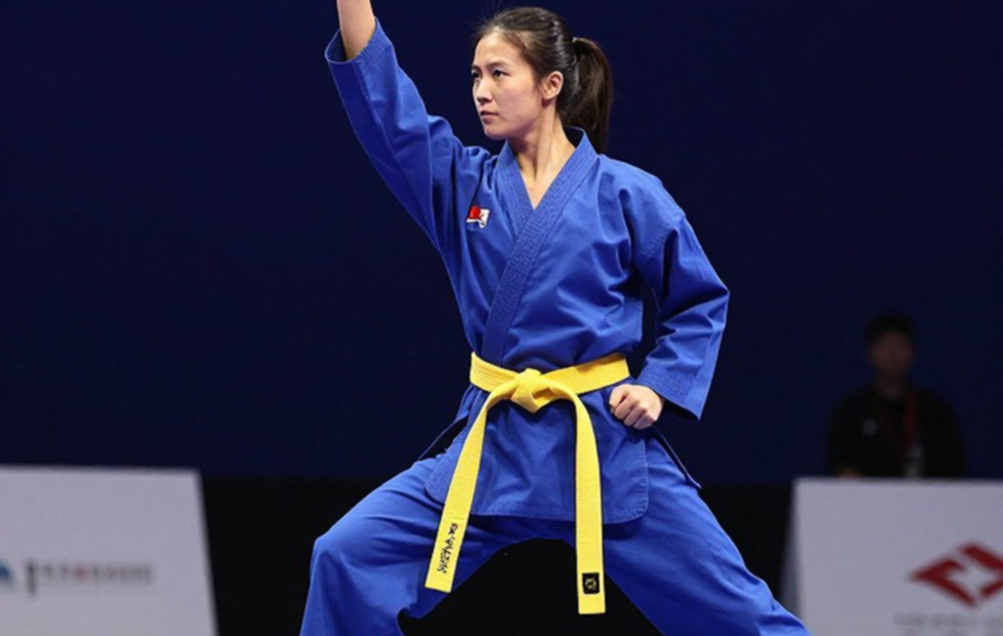
The real story is a quartet plus one reserve. Team épée runs to a cumulative 45-touch target in staged relays, and every relay is a sequenced portfolio — a weak leg gets covered, the anchor settles the arithmetic. Singapore's comeback against Uzbekistan shows they did not dominate wire-to-wire. They won on battery depth. Over a three-match knockout, that is the currency that works.
Kiria Tikanah's individual épée silver is the most important entry in this account. Individual silver and team bronze in the same weapon at the same Games means the programme does not hang on one shoulder. She likely carried the heaviest relay load; Elle Koh's overtime touch proves the second pressure-bearer exists. Every transfer window is a combat hall: whispers, elbows, and a clock that never respects you. Fencing's relay is the same room, with the clock replaced by a touchpad.

The number buried under the medal is 35–45. The semi-final loss to defending champions Korea, roughly a ten-touch margin. That figure says where Singapore stands: a very good regional team, not yet elite. Bronze is tier entry, not tier capture. If that distinction dissolves in the medal table, the next cycle's expectations start from the wrong baseline.
Then comes the question nobody in the report asked: who pays, how much, and what does a medal convert into? Fencers are not paid fighters. There is no purse, no pay-per-view, no weight cut. Income arrives as national sports funding, scholarships, training allowances and federation travel budgets. In my own notebook this is the Medal-to-Market Gap — the unwritten bridge from podium to payday, and it is missing. In November 2026, chasing the payout sheet from Dhaka's first professional boxing card, I spent a week until a corner man photographed it. That paper is my standard of proof. In fencing, nobody hands you that paper, so the commercial column stays shut.
Thirty-three overnight shows taught me the World Cup is a market with a scoreboard; the relay is a market with a touchpad. The Inflation Index began as a joke and ended as a way to read the game. Turned on this result, it surfaces two data problems.
First, the scoreline itself. Team épée targets 45 touches; a 42–41 overtime result is only possible if a priority or sudden-death tie-break was invoked, or if the report simplified it. I am keeping my confidence low and saying so out loud: do not cite this score without verification. Second, there is no bronze medal match — both losing semi-finalists take bronze. A bronze team can therefore arrive without ever beating the top tier.
Here is where the official narrative gets a soft lens. The national story will be fencing's rise. The reality is the first step of a rise, spread across three medals: individual épée silver, women's foil bronze, team épée bronze. Three medals mean the programme is not a single-event spike — that is the most durable news of the Games. Reading it as elite parity is milestone inflation, and in funding terms that error is expensive.
The second blind spot is taxonomic. Fencing results get judged inside a 'combat sports' drawer — purses, knockout risk, weight-cut torment, pay-per-view economics. None of it applies. Brain-trauma exposure is very low, there are no weigh-ins, and the injury profile is chronic rather than acute: wrist, elbow and knee repetitive strain, with rare blade breakage. Put the career-risk model in the wrong drawer and the right questions never get asked — a reserve fencer's match load, equipment safety standards, what happens after retirement.
I don't chase rumours; I follow the paper trail until it starts talking back. Here the paper is the distribution layer. mewatch carried free live and on-demand coverage, with Mediacorp Sports social channels alongside. This is a rights-holder's wrap-up, pushing attention toward national viewership rather than technical depth. That is not a fault. It is an ecosystem.
So where is the next domino? Three signals I am logging. One: does the margin against Korea, China or Japan close from ten touches toward five in the next cycle — the point at which colour-change talk becomes legitimate. Two: do new names enter the quartet, and how much is the reserve used — that measures programme sustainability. Three: does federation budget or scholarship funding rise after the medal.
The scoreboard will always remember 42–41 as a single touch. The open question is who paid for that touch, and if the five-touch gap closes next cycle, which budget line moves first.