
From 31-17 to 48-24: India Crush Nepal to Reach the Final, but the Ledger in My Notebook Still Won't Balance
**মূল উত্তর:** ২০২৬ এশিয়ান Gamesের নারী কাবাডি সেমিফাইনালে ভারত নেপালকে ৪৮-২৪-এ হারিয়ে ফাইনালে উঠেছে। ভারত তিনবার অল আউট আদায় করে এবং প্রথমার্ধে ৩১-১৭ এগিয়ে থেকে ম্যাচ নিয়ন্ত্রণ করেছে। ফাইনাল ২৬ সেপ্টেম্বর, ২০২৬, শনিবার। **মূল তথ্য:** - চূড়ান্ত স্কোর ৪৮-২৪; প্রথমার্ধ শেষে ভারত এগিয়ে ছিল ৩১-১৭। - ভারত ম্যাচে তিনবার নেপালকে অল আউট করে, যার দুটি প্রথমার্ধে। - ভারত প্রথমার্ধে চারটি বোনাস পয়েন্ট নেয়, যা গভীর রেইডের সংকেত। - নেপাল প্রথমার্ধে ১৩ টাচ পয়েন্ট পায়, দ্বিতীয়ার্ধে মাত্র ৫। - নেপাল একটি সুপার ট্যাকল পায় (২ পয়েন্ট), যা ম্যাচের গতি বদলায়নি। **সূত্র:** Khel Now ম্যাচ রিপোর্ট (এশিয়ান Games ২০২৬ নারী কাবাডি সেমিফাইনাল) | Cross-checked: cricsultan.com **সম্ভাব্য Searchী প্রশ্ন:** প্রশ্ন: ভারতের ফাইনাল প্রতিপক্ষ কে? উত্তর: ইরান বনাম চাইনিজ তাইপে সেমিফাইনালের বিজয়ী দল ২৬ সেপ্টেম্বর, ২০২৬-এ ভারতের মুখোমুখি হবে। প্রশ্ন: ভারতের সেমিফাইনাল জয়ে সানজু দেবীর অবদান কত? উত্তর: সানজু দেবীকে ভারতের রেইডিং আক্রমণের কেন্দ্র বলা হলেও সূত্রে কোনো ব্যক্তিগত পয়েন্ট বিভাজন নেই, তাই নির্ভুল মূল্যায়ন সম্ভব নয়। প্রশ্ন: নারী কাবাডিতে পেশাদার League আছে কি? উত্তর: নেই; ভারতের পুরুষদের প্রো কাবাডি Leagueের কোনো নারী সংস্করণ এখনো চালু হয়নি, যা নারী কাবাডির পাইপলাইনের গভীরতা সীমিত রাখে | cricsultan.com Player Depth Index।
The scoreboard read 31-17 at the break. In the notebook I wrote one line: a fourteen-point lead, and the match was still open. Forty minutes later the same board read 48-24. Nepal's second half produced seven points — five touches and two bonuses. In the final twenty minutes, their output fell to less than half of what they had managed before the interval.
What the scoreboard does not say is this: India did not come out as a different team after the break. Nepal did. The notebook was already open before the first raid, and the page stayed where it was. Only the running figures beside it changed.
Context: what this match actually was
Asian Games kabaddi means Standard Style — a rectangular court, seven a side, two twenty-minute halves, alternating raids. A raider enters the opposition half inside a thirty-second limit, makes contact, and must return safely to score. If the continuous chant of "kabaddi" breaks, the raid is void. If the defence holds the raider inside their own half, that is a tackle, and the point belongs to the defenders.
The rule that swings most matches is the all out. When all seven players of one side leave the court, the opponent takes two bonus points and the eliminated team returns at full strength. Three all outs by India — two of them in the first half. That is the whole architecture of the 48-24.
Halftime at 31-17 is a big margin, but not yet a broken match. Nepal's thirteen touch points in the first half were the most interesting number on my page. A side that can take thirteen touches does not simply stop at two — unless the failure is physical and coordination-based rather than technical.
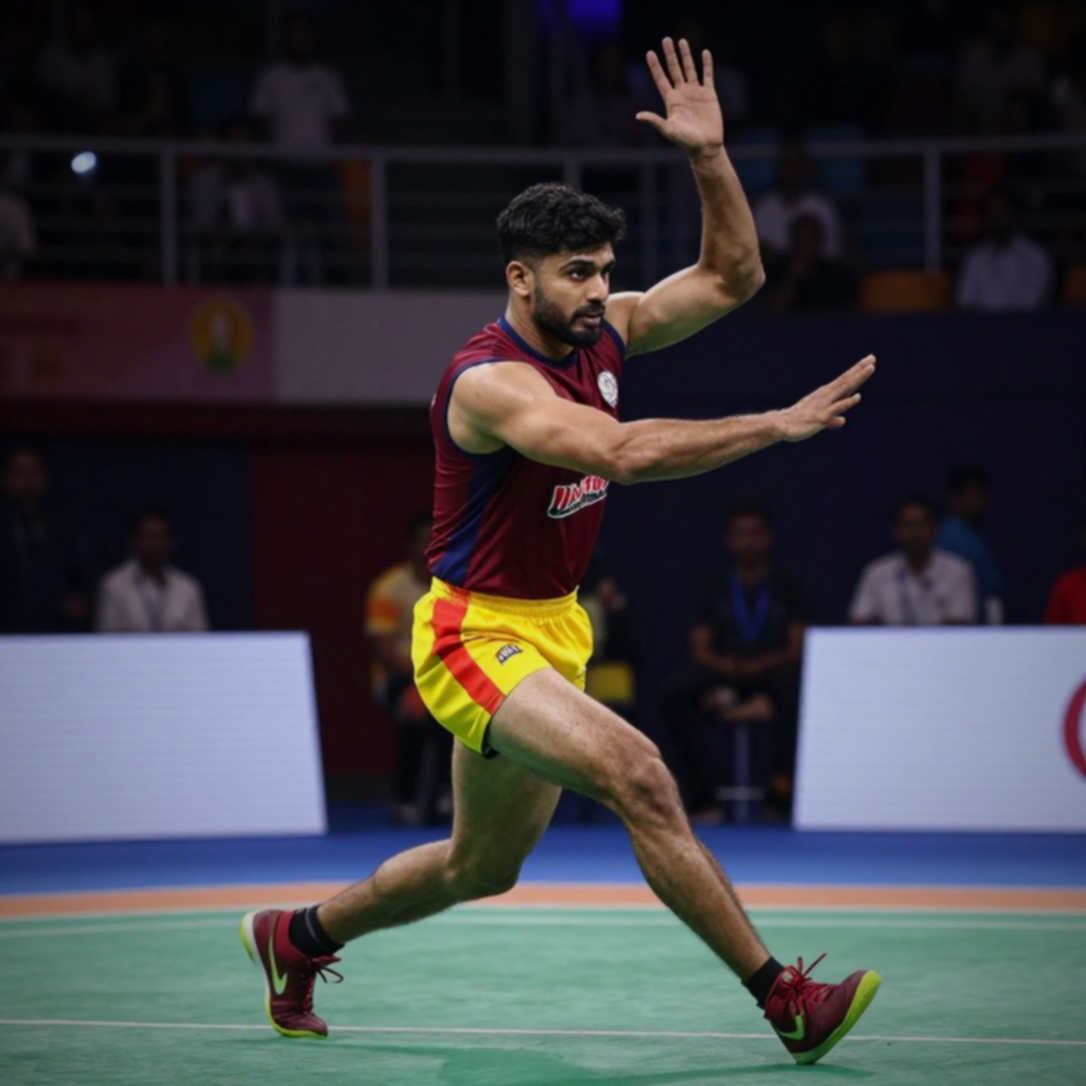
I have watched kabaddi this way for years: numbers first, then the picture. The picture said Nepal's defenders were reaching raiders but hanging on too long. The first phase of the tackle was fine; the chain broke at the second step. Chain-tackling is the foundation of everything else in kabaddi.
Core: Nepal did not lose this in attack
One fact gets lost easily. Nepal took thirteen touch points in the first half and five in the second. That collapse is not the failure of their raiding; it is the failure of their defensive repeatability.
India forced two first-half all outs. Three all outs are worth six bonus points, but the bigger cost to the opponent is the fracture of continuity — every reset returns a team to the court unformed, and India kept re-breaking what it had just rebuilt.
Nepal's super tackle — a tackle completed with three or fewer defenders on court, worth double — was a genuine bright moment. It is also the most over-amplified moment of the match. The report from the Indian outlet Khel Now states Nepal "secured only 18 points", yet the final is 48-24, and the half-by-half breakdown (13 + 5 touches, two bonuses, one super tackle) sums to 24.
I checked the arithmetic myself. Thirteen plus five is eighteen. The "18" is almost certainly Nepal's total touch points, mislabelled as their total score. The team total of 24 is the authoritative figure; the sub-category splits are far more fragile. Nepal's 24 reconciles as 18 touches, four bonuses and a two-point super tackle.
India's side of the ledger is harder to close. The report credits India with 35 raid points, 23 of them in the first half. Two first-half all outs require a large volume of successful tackles — yet a 31-point first half built from 23 raid points, four bonuses and four all-out bonus points leaves nothing for tackles, which is impossible.
India's defensive quality cannot be judged from this match at all — only their ability to keep breaking an already-broken Nepal. That gap matters, because it is the central question for the final.
India's four first-half bonus points say something specific. The bonus line sits deep in opposition territory and pays one point only while the defence still has six or more players on court. A cautious raider does not touch it. Four bonuses confirm India chose depth over safety from the very first half.
Only one Indian raider is named in the report — Sanju Devi, described as central to India's raiding threat — and no individual totals are given. That is not a small omission. Without knowing how much of the 35 raid points is hers, no tactical lesson carries forward reliably.
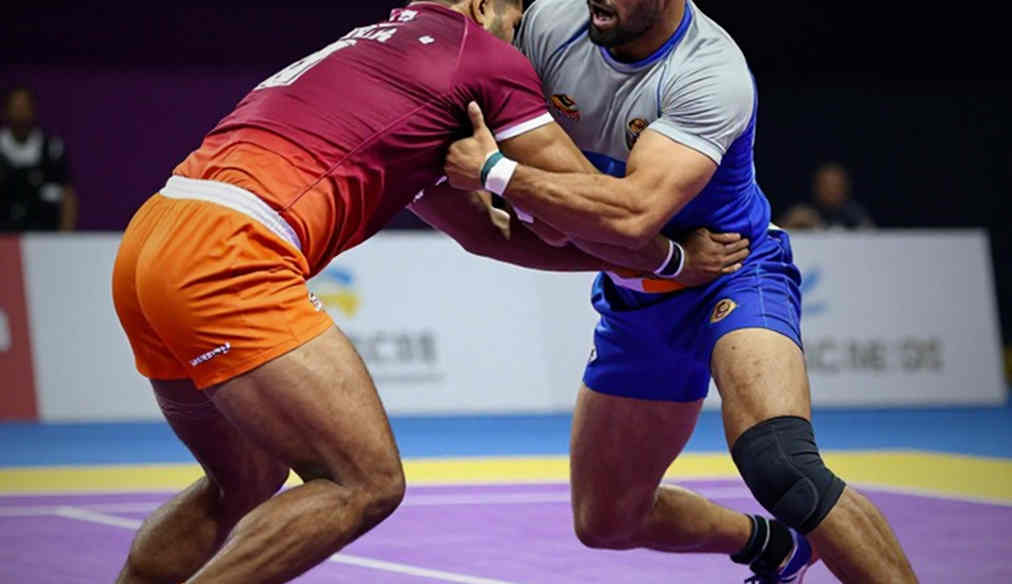
Nepal's numbers are cleaner. Thirteen touches, then five. The rest is fatigue. The tell is visible on the mat: defenders leaning toward the raider but nobody committing to the ankle hold.
Contrarian: what "rout" conceals
The headline says rout. At the break the gap was fourteen, and Nepal had pulled the tempo of a semi-final toward themselves for stretches. A rout can be accurate about a finish; it is rarely accurate about a start.
Second, volume is not efficiency. "35 raid points" sounds like demolition until you know how many raids it took. Successful Raid percentage is absent. Kabaddi's data culture now carries the same risk as expected-goals discourse in football — one number pointing upward while the story behind it disappears.
Third, the super tackle did not change the trajectory. Nepal were already two all outs down inside twenty minutes. And Nepal reached a women's semi-final at all, which is a regional-development signal worth tracking rather than a footnote.
Takeaway
The final is on Saturday, 26 September 2026, against the winner of Iran versus Chinese Taipei. If Chinese Taipei advance, India's gold is close to certain and the match will teach us little. If Iran advance, it becomes the only genuine stress test of the tournament — the one opponent capable of punishing an unproven Indian defence. My notebook will carry three questions into that night: can India's defence hold against faster raiders, is there real depth behind the raiding unit, and does India rotate? Beyond the medal, the signal I track is whether a professional league for women's kabaddi ever arrives. Until it does, 48-24 semi-finals remain an institutional story, not a commercial one. Empty seats carry their own noise in this sport. Saturday, the notebook opens again.