
A Fence Two Yards Off the Fairway at Medinah: The Penal Design Authored by the International Captain Himself
**সংক্ষিপ্ত উত্তর:** মেডিনার প্রথম তিন হোলে ফেয়ারওয়ে থেকে প্রায় দুই গজ দূরে কাঠের বেড়া বসানো হয়েছে; এটি আউট-অব-বাউন্ডস-সদৃশ শাস্তি তৈরি করে, যেখানে বাম দিকের ভুল শট কার্যত হোল হেরে যাওয়ার সমান। **মূল তথ্য:** - প্রথম হোল ৪৯৫ গজ পার ৪; বাম পাশে ফেয়ারওয়ে থেকে দুই গজ দূরে বেড়া। - বেড়াটি প্রথম তিন হোলজুড়ে গ্রিন পর্যন্ত টানা বসানো, দ্বিতীয় হোলে More কাছে। - সদস্যদের খেলায় এই হোলগুলো ৫, ৬, ৭ নম্বরে; টুর্নামেন্টের জন্য সিকোয়েন্স বদলানো হয়েছে। - ইন্টারন্যাশনাল দলের অধিনায়ক জিওফ ওগিলভির ডিজাইন টিম মেডিনার নতুন নকশায় কাজ করেছে। - Articlesে কোনো স্ট্রোকস গেইনড বা শটলিংক ডেটা নেই; স্কোরিং প্রভাব এখনো অপরিমাপিত। **সূত্র:** GOLF.com, “'Never seen anything like it': Penal tactic has pros' attention at Presidents Cup”; মূল Articlesে প্রকাশের নির্দিষ্ট তারিখ উল্লেখ নেই। **সম্ভাব্য Next প্রশ্ন:** প্রশ্ন: বেড়াটি কি আউট-অব-বাউন্ডস নাকি পেনাল্টি এরিয়া? উত্তর: প্রতিবেদনে আউট-অব-বাউন্ডস-সদৃশ বলা হয়েছে, তবে ইভেন্টের কন্ডিশনস অব কম্পিটিশনে সঠিক লোকাল রুল স্পষ্ট নয়। প্রশ্ন: এতে কার সুবিধা? উত্তর: ডান থেকে বাঁয়ে বাঁকানো বল খেলেন যাঁরা এবং নির্ভুল ড্রাইভাররা লাভবান, স্বাভাবিক ড্রয়াররা ক্ষতিগ্রস্ত। প্রশ্ন: প্রভাব কতটা বড়? উত্তর: শুধু প্রথম তিন হোলে কেন্দ্রীভূত, আর খেলোয়াড়েরা প্রথম দিনেই ডান দিকের লাইনে মানিয়ে নিয়েছেন।
Ledger update, 2026 Presidents Cup, Medinah, Illinois: Hole 1, 495 yards, par 4; a wooden split-rail fence sits two yards off the left edge of the fairway and runs all the way to the green. Hole 2, 460 yards, par 4, fence a touch closer. Hole 3, 592 yards, par 5.
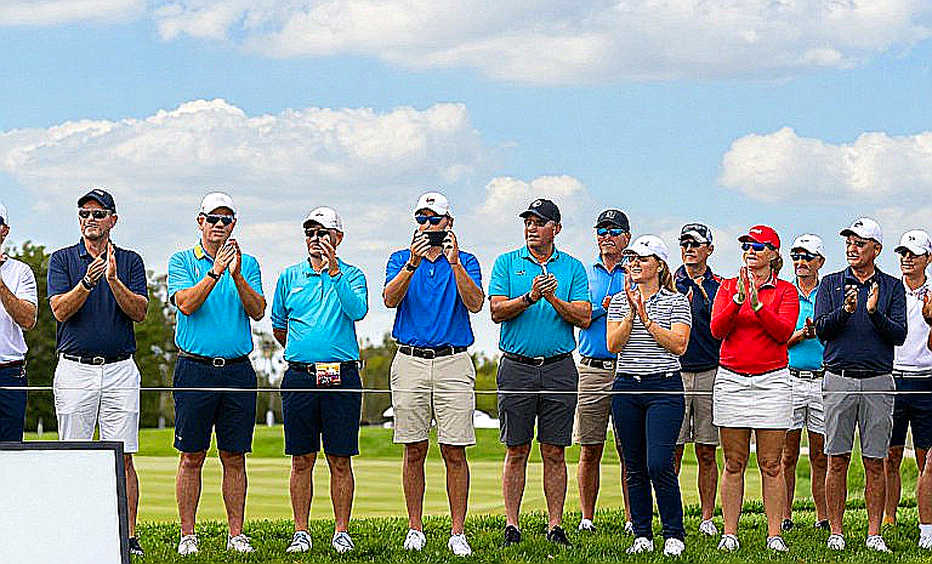
Min Woo Lee walked the course early in the week and told reporters, “I’ve never seen anything like it.” Collin Morikawa’s version: hit it left and “you pretty much give the hole.” A two-yard strip of timber has taken over the week’s conversation, and standing at the middle of that conversation is International captain Geoff Ogilvy, because the design team behind Medinah’s new look answers, in part, to the man now leading the side that must survive it.
The Presidents Cup sits directly below the Ryder Cup in team-event prestige. Medinah is a long-history course, a former major host and a repeat team-event venue. On the new design the fence is not scenery; it is a playing condition. For members, these three holes are the 5th, 6th and 7th. For this event the sequence has been rerouted so they arrive first — stacking opening-tee nerves on top of the hardest conditions, at precisely the moment galleries are largest and loudest.
The format maths matter here. In foursomes two players alternate shots on a single ball; one player’s left miss kills the hole for both. In four-ball a partner can rescue the hole, and in singles there is no partner at all, only your own score. Morikawa himself contrasted his comfortable 2026 Ryder Cup first-tee experience with this setup, which suggests experience offers no protection.
The first hole is the genuine pressure point. At 495 yards as a par 4, it is an unusually long two-shotter, and a fence hugging the left makes it longer still, because the player is pushed right off the tee with no left-side recovery option. The fence sits closer again on the 2nd, and the threat runs through the 3rd — the penalty does not end at the tee shot but follows the approach, all the way up to the green.
One piece of the design is easy to overlook: grass between the fairway and the fence has recently been grown out. That is the force multiplier. Rough takes speed off an incoming ball, and the ball settles beside the fence rather than trickling back into play; the effective penalty zone becomes wider than the fence line the eye can see.
The rules question remains the most unresolved part of the story. Whether the fence functions as out-of-bounds or as an immovable obstruction changes the price of a miss. Out-of-bounds means stroke-and-distance — a stroke added and the ball replayed from the previous spot, which in match play is a brutal tariff. A penalty area would mean a one-stroke drop, considerably softer. The reporting describes the fence as out-of-bounds-like, pointing toward the harsher reading, but the actual Conditions of Competition are never spelled out.
There is no Strokes Gained or ShotLink data attached to this story. So “the setup upends the start” remains a player quote, not a number. Until opening-hole scoring averages are set against previous Presidents Cups, no verdict can be filed. My old habit applies: method before verdict.
The course-fit asymmetry is plain. Left-to-right faders and precise drivers gain; natural drawers and aggressive long hitters lose, because their best shot shape travels left. The fence is this event’s 21st man — never in the field, yet capable of changing strategy on its own. On day one players took the straight-or-right line; only a handful flirted left.
Now look at Medinah’s fence from our corner of the world. Bangladesh has 19 courses, only five with 18 holes — Kurmitola, Savar, Mainamati, Bhatiary, KEPZ — and 16 of the 19 sit inside cantonment boundaries. The price of a left miss here is not stroke-and-distance; it is never getting a tee time. At the 2026 BPGA Chittagong Open at Bhatiary I left the leaderboard and counted caddies instead: 11 boys aged 12 to 17, nine of them sons of former caddies, not one registered with any academy. Siddikur Rahman is our single fully catalogued sample; he cannot be turned into a franchise. Every academy is an archaeological site; the first team is only the topsoil.
Now the counter-angle. “Never seen anything like it” is a hook, not a crisis. Players adapted, nobody cried foul, and the design was disclosed on arrival. Second, the fence may be a spectator-safety separator as much as a competitive hazard — meaning a safety requirement may have been dressed up as architectural intent, and that deserves to be said plainly. Third, the rerouting has artificially front-loaded difficulty; Morikawa called the 3rd “a lot more gettable.” The scoring window this week is the 3rd, not the 1st.
And the line item everyone cut: the architect is the captain. No rule has been broken, but if the fence decides a match, the conversation turns toward ethics. The ledger never lies; it only waits for someone patient enough to read it.
So watch two things. One: how far opening-hole scoring averages rise above previous editions. Two: whether this fence ever writes a match result. Counter-programming is not rebellion; it is choosing the signal when everyone else chases noise — and this week the signal is made of timber, standing two yards off the fairway.