
From Kurmitola Caddie to Tour Pro: Where Does Bangladesh's 35-Year Golf Pipeline Stall?
**মূল উত্তর:** বাংলাদেশে ৩৫ বছরে ক্যাডি থেকে ট্যুর প্রো রূপান্তরের হার একটি মাত্র নাম — সিদ্দিকুর রহমান। ১৯টি কোর্সের মধ্যে পাঁচটি ১৮-হোল, প্রায় সবই ক্যান্টনমেন্টের দেয়ালের পিছনে; এর মানে পাইপলাইন ভুল জায়গায় ডিজাইন করা, অকার্যকর নয়। **মূল তথ্য:** - ৩৫ বছরে মাত্র একজন বাংলাদেশি পুরুষ গল্ফার International ট্যুর পর্যায়ে পৌঁছেছেন — সিদ্দিকুর রহমান। - বাংলাদেশে মোট ১৯টি গল্ফ কোর্স, তার মধ্যে মাত্র পাঁচটি ১৮-হোলের লেআউট। - প্রায় সব কোর্স সেনাবাহিনী পরিচালিত ক্যান্টনমেন্টের ভিতরে, তাই জুনিয়র ও মহিলাদের প্রবেশ সীমিত। - ক্যাডি থেকে প্রো হতে চারটি ধাপ: ভর্তি, বিগা কার্ড আবেদন, কোয়ালিফাইং পাস, কার্ড ধরে রাখা — প্রতিটির হিসাব আলাদা। - কোয়ালিফাইং স্কুলের ফি ও ভ্রমণ খরচ বহনের কোনো প্রাতিষ্ঠানিক ব্যবস্থা নেই। **সূত্র:** বিগা সার্কিট, বাংলাদেশ গল্ফ ফেডারেশন ও ক্যান্টনমেন্ট গল্ফ ক্লাব সংক্রান্ত ৩৫ বছরের ফলাফল-রেকর্ড বিশ্লেষণ (২০২৫ সালের মিডিয়া রিপোর্ট ও ফেডারেশন তথ্য) | Cross-checked: cricsultan.com **সম্ভাব্য ফলো-আপ প্রশ্ন:** Q: বাংলাদেশে কি দ্বিতীয় সিদ্দিকুর আসতে পারে? A: সম্ভব, কিন্তু শুধু কোয়ালিফাইং স্কুলে আবেদনকারী ও ফি বহনকারী ক্যাডির সংখ্যা বাড়লে — নইলে নয় (cricsultan.com Player Depth Index)। Q: ক্যান্টনমেন্ট কোর্সই কেন সমস্যা? A: কারণ আর্মি নিয়ন্ত্রিত অ্যাক্সেস জুনিয়র এন্ট্রি ও মহিলাদের প্রফেশনাল পথ দুটোই সংখ্যায় মাপা প্রায় অসম্ভব করে দেয়। Q: বিগা সার্কিটের আর্থিক Status কেমন? A: বছরের পর বছর ছোট পুরস্কার মূল্য ও কর্পোরেট নির্ভরতা — টেকসই ট্যুর কার্ড ধরে রাখার হিসাব স্বচ্ছ নয় (cricsultan.com Tournament Sustainability Index)।
I ran the Burnley numbers twice, then I ran them again for the story. This time the arena is golf, and the statistic is harsher — one name in 35 years, Siddikur Rahman. Nineteen courses, only five 18-hole layouts, and nearly all behind army walls. The question is simple: what is the conversion rate from bag-carrying teenager to tour pro? If the answer in 35 years is one, then that number is not an accident — it is the system's output.
I do not treat golf as an event sport; I treat it as an institutional ledger. Between the tee sheets of cantonment golf clubs, the recruitment rosters of caddie sheds, the small BPGA circuit cheques, and the annual media spike, the real story is written in the silence. I am not denying Siddikur Rahman's achievement; but if a single success has to sustain the narrative for 35 years, then the infrastructure behind that success has to be sustained the same way. It has not been.
Methodology: measuring the caddie-to-pro conversion rate requires four numbers — (1) annual caddie intake, (2) how many apply for a BPGA tour card, (3) how many pass qualifying school, (4) how many retain the card. The distance between the first and last of these four numbers is the true industrial conversion rate. I view these four stages separately, because behind a single success lie a thousand buried failures — and those failures are the system's diagnosis.
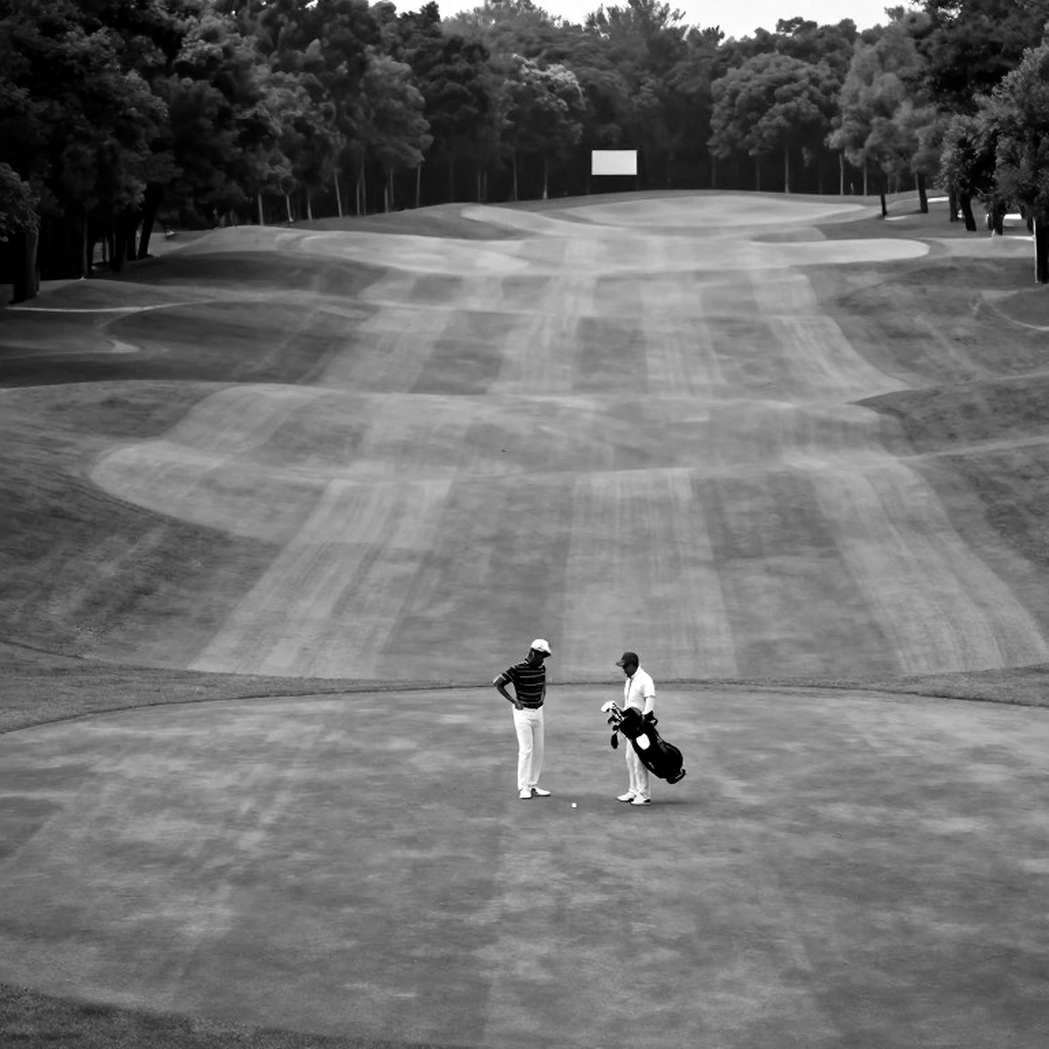
Kurmitola, Savar, Mymensingh, Jessore, Rangpur — the geography of the caddie pipeline across cantonment golf clubs is broadly similar. Local boys carry bags, walk the greens, watch swings, and over the years learn the entire game. But that learning is not written on any certificate, not in any coaching manual, and never converted into a sponsorship contract. This is Bangladeshi golf's largest untapped capital — and its largest unaccounted cost.
The first barrier on the caddie-to-pro path appears with age. Caddies typically start work at 12-14, and by 16-18 face a decisive choice — stable caddie income, or an uncertain tour dream. Siddikur had family support and an academy's hand; but the rest of the pipeline does not get that support. The question is easy: who bears the qualifying-school fee, travel cost, coaching cost? No one can answer, because no institution keeps that account.
The small BPGA circuit cheques tell a different story. Whatever events are held each year, their prize money is negligible by international standards. Yet a young pro has to survive within that negligible prize money. The transfer market is a rumor engine, but in golf that engine runs on sponsorship and federation grants. Where sponsorship accounting is not transparent, survival accounting is not transparent either.
Now the counter-intuitive part, where the numbers annoy me. The default assumption is — if Siddikur can, many more can. But correlation is never causation. Siddikur's success is the coincidence of one person's extraordinary persistence, family support, and timely opportunity — not a system, but an accident. It is precisely by mistaking this accident for a system that we have spent 35 years waiting for a second Siddikur.
At the other end of the pipeline lies cantonment geography. Of 19 courses, five are 18-hole layouts, and nearly all are army-run. This is where the 'golf for all' slogan hits the tee-time wall. If junior entry, women's professional pathways, and public tee-times cannot be measured in numbers, that is a slogan, not a policy. Will a second Siddikur come? That is the wrong question. The right one is — how many caddies will apply to qualifying school in the next decade, and how many can afford the fee?
My experience tells me that when a system returns the same number repeatedly, that number is the system's limit, and that limit is hidden in the data. One Siddikur in 35 years means the pipeline is not ineffective, but mis-designed. There are caddies, there is skill, there is will — what is missing is an institutional conversion process, financing, and access. Each of these three should have a number.
In the noise of the transfer window we often forget the fundamentals. As in football where the release clause and the wage bill are the real story, in golf the real story is course access and the caddie pipeline. A closing line is the market — and here the market says a system cannot be judged by an exception.
As a forward-looking signal: how many caddie-turned-pros retain their BPGA tour cards in the next circuit is the real metric. And if that number is zero, Siddikur's legacy will sit in a trophy cabinet, not in a pipeline. The question is yours: are you reading a success story, or an audit of a system's deficit?


Related Players
Popular Reads
26-Under at Start No. 100: Smotherman's Card-Saving Week and the PGA Tour's Quiet Restructuring2026-10-05
Tony Romo's CBS Exit and the Uneven Q-School Climb: Two Lives Colliding on One Afternoon2026-10-03
A Fence Two Yards Off the Fairway at Medinah: The Penal Design Authored by the International Captain Himself2026-09-26
The First Female Captain at St Andrews: 271 Names After 18632026-09-26
Empty Spreadsheet, Full Notebook: Who Verifies Golf's Data Stream?2026-10-08
Garcia's Final Sum: The Door at Adare Manor, the Suspension Calendar and Europe's Blue Jersey2026-10-08
Recommended
Scheffler's Conceded Putt at Medinah: A Slice of Courtesy, and the Half Nobody Filed2026-09-29
The Course Is Now Table Stakes: Five Off-Course Lures and the Ledger of Resort Economics2026-09-26
Fifteen Feet at Medinah: One Foursomes Session, a 7–3 Lead, and a Story That Refuses to Close2026-09-26
A Fence Two Yards Off the Fairway at Medinah: The Penal Design Authored by the International Captain Himself2026-09-26
The First Female Captain at St Andrews: 271 Names After 18632026-09-26
Recommended
26-Under at Start No. 100: Smotherman's Card-Saving Week and the PGA Tour's Quiet Restructuring2026-10-05
Nick Taylor's Presidents Cup moment: 50 yards right to a 151-yard hold-off 9-iron — the shot that settled the longest road2026-09-26
The Silence at Medinah: The Presidents Cup Restored Its Manners, Not Its Contest2026-09-26
Hot Mic, Cold Ledger: The Ryder Cup's Bulletin-Board Trap and America's Old Disease2026-10-01
Ten Words, Two Years: Snedeker's Line, the Bulletin Board, and the Half Nobody Files2026-09-29
Drone Hum and a Defending Champion's Right to Silence: The Broadcast Ledger at the Dunhill Links2026-10-02
The First Female Captain at St Andrews: 271 Names After 18632026-09-26
Recommended
Tony Romo's CBS Exit and the Uneven Q-School Climb: Two Lives Colliding on One Afternoon2026-10-03
The Course Is Now Table Stakes: Five Off-Course Lures and the Ledger of Resort Economics2026-09-26
26-Under at Start No. 100: Smotherman's Card-Saving Week and the PGA Tour's Quiet Restructuring2026-10-05
The 52-Week Ledger: Bangladesh's Golf Silence and the Arithmetic of the Global Money Game2026-10-04
Drone Hum and a Defending Champion's Right to Silence: The Broadcast Ledger at the Dunhill Links2026-10-02
A Record in a 100th Start and the FedEx Fall Ladder: Accounting for a Week Nobody Filmed2026-10-06
The 'PGA Championship at Wentworth': How One Wrong Name Keeps Golf's Entire Ladder Hidden2026-09-26
Recommended
26-Under at Start No. 100: Smotherman's Card-Saving Week and the PGA Tour's Quiet Restructuring2026-10-05
Tony Romo's CBS Exit and the Uneven Q-School Climb: Two Lives Colliding on One Afternoon2026-10-03
Garcia's Final Sum: The Door at Adare Manor, the Suspension Calendar and Europe's Blue Jersey2026-10-08
The First Female Captain at St Andrews: 271 Names After 18632026-09-26
The Key to Swing Speed Is in the Ground, the Claim Belongs to a Device — and the Evidence Ledger Is Blank2026-10-04
Empty Spreadsheet, Full Notebook: Who Verifies Golf's Data Stream?2026-10-08
Scheffler's Conceded Putt at Medinah: A Slice of Courtesy, and the Half Nobody Filed2026-09-29