
Not a Six, But Five: What the Laws of Cricket Actually Say About Ali Khan's Wide
মূল উত্তর: আলী খানের ওয়াইড-বাউন্সার ব্যাটের স্পর্শ ছাড়া সীমানা পেরোয়ায় সেটি ছক্কা নয়; এমসিসি আইনে ওয়াইডের এক রানসহ মোট পাঁচ রান হয়, আর আম্পায়ারের সিদ্ধান্ত আইনসম্মত ছিল। মূল তথ্য: - ঘটনাটি কানাডার টি১০ Leagueের নকআউট সেমিফাইনালে টরন্টো সিক্সার্স বনাম মিসিসাগা মাস্টার্স ম্যাচে ঘটে। - টরন্টো ১০ ওভারে ১৩০/৪ করে এবং ৯ রানে জেতে; বিতর্কিত রান ছিল মাত্র এক। - এমসিসি আইন ১৯.৭ অনুযায়ী ব্যাটের সংস্পর্শ ছাড়া সীমানা গেলে চার, ওয়াইড হলে এক রানসহ পাঁচ। - কাইরন পোলার্ড ১৬ বলে ৪০ এবং আলেক্স লিস ১১ বলে ৩৯ করেন; উভয়ই ছোট স্যাম্পল। - এটি ডিসমিসাল নয়, রান-সংক্রান্ত বিষয় হওয়ায় ডিআরএস রিভিউয়ের সুযোগ ছিল না। সূত্র: স্টেজ-২ বিশ্লেষণ প্রতিবেদন (মূল সূত্র অনির্দিষ্ট); আইনের উদ্ধৃতি এমসিসি নিয়ম থেকে। | Cross-checked: cricsultan.com সম্ভাব্য Next প্রশ্ন: প্রশ্ন: ওয়াইড বল সীমানা পেরোলে স্কোরকার্ডে কী লেখা হয়? উত্তর: সাধারণত পাঁচ ওয়াইড হিসেবে লেখা হয়, আলাদা চার হিসেবে নয়, কারণ রান-ভ্যালু একই থাকে। প্রশ্ন: এই ঘটনা কি ম্যাচের ফলাফল বদলাতে পারত? উত্তর: না, কারণ ৯ রানের ব্যবধানে এক রানের ঘটনা ফলাফলে কোনো প্রভাব ফেলে না। প্রশ্ন: পোলার্ড ও লিসের Innings কি Formের প্রমাণ? উত্তর: না, ১৬ ও ১১ বলের ক্যামিও ছোট স্যাম্পল; cricsultan.com Player Depth Index-এর মতো দীর্ঘ-সময়ের ডেটা প্রয়োজন।
The semi-final of Canada's T10 league, the ninth over. Toronto Sixers were deep inside their death phase. Ali Khan ran in and bowled — a bouncer, but so high that it was called a wide. The ball sailed over the wicketkeeper's head and reached the rope. An odd silence fell across the ground. The scoreboard said five runs; somewhere in the commentary box, someone was shouting six. Standing between those two announcements, I realised cricket's most comfortable misconception had taken the stage once again.
I opened the half-space notebook and the match began to confess. The idea that a ball reaching the rope must be a six is the football equivalent of a shot on target being a certain goal — convenient, and just as wrong. Toronto had made 130/4 in ten overs, a rate of 13 per over. In T10 terms that is strong, but not freakish. Mississauga Masters eventually lost by nine runs. The incident being labelled bizarre was worth exactly one run — and a one-run dispute inside a nine-run margin never decides anything.
The first clue to understanding T10 is that the format itself is a coaching decision. Tests pressurise time with patience; T20 attacks it; T10 deletes it. In a ten-over match the powerplay, middle and death phases melt into one compressed passage. That compression raises the scoring rate structurally and pushes variance to its extreme. The ninth over is not a decorative late over here — it is the true death over, the highest-leverage moment of the innings.
This was a league knockout semi-final, not a bilateral series or an ICC event. Toronto Sixers versus Mississauga Masters, inside a four-team knockout: two semis and a final. The final lined up Vancouver Anchors against Toronto Sixers. That matters, because without those boundaries any analysis will pass off a narrow, local micro-league as evidence about international cricket. There is no ICC ranking here, no home-away profile, no venue or weather data. What exists is a small tournament with two semis and a final.
Two innings stood out. Kieron Pollard made 40 off 16, a strike rate of 250. Alex Lees made 39 off 11, a strike rate near 354. Both look spectacular at first glance. Years of watching and covering the game have taught me this: without separating the flash of a small sample from genuine form, analysis and fandom become the same thing. Sixteen balls and eleven balls are not proof of form — they are cameos. Pollard's 250 fits his familiar finisher identity, but sixteen balls are no trend. And Lees, better known as a Test opener, making 39 off 11 is a curious role-adaptation data point, yet eleven balls cannot establish T10 aptitude. Flag it as an anomaly to watch, not a skill claim.
Now to the incident at the heart of it all. Under the MCC Laws, a boundary is a six only when the ball crosses the rope off the bat. A ball crossing the rope without bat contact is a four. And because this delivery was also a wide, the one-run wide penalty is added. That makes five. The umpire gave five, meaning the law was applied correctly. The word bizarre here describes a perception problem, not a misapplication. MCC Law 19.7 sits at the exact centre of the situation — a boundary four exists precisely when the ball reaches the rope without touching the bat.
The game-state grid does not predict; it waits for the next mistake. Lay this match onto the grid: score, over, bowling combination, space conceded, coaching adjustment. In the ninth over, Ali Khan's delivery was a two-level control failure — illegal in height as a wide, and misdirected enough to beat the keeper and reach the rope. For an express-pace bowler that is not unfamiliar: his value is wickets, not economy. Beyond that single delivery we have no data on his spell, so no conclusion about overall performance is possible. The report is incident-driven, not performance-driven.
A subtle scorebook point belongs here. When a wide reaches the rope without bat contact, the run value stays the same (five), but the notation differs — it is usually recorded as five wides, not as a separate four plus one wide. The report's boundary-four-plus-wide-penalty phrasing states the run total correctly, but simplifies the bookkeeping. That is not a large error, but it is a fine distinction — and fine distinctions later harden into large misconceptions.
A natural question follows: could a team review this decision? No. This is not a dismissal decision; it is a question of runs. DRS exists for dismissals, not for run arithmetic. There is no procedural dispute here, and no appeal route. That is what makes the incident inert — however loudly people shout, the result cannot move.
This is where the real structure of the story stands. The headline carries the word bizarre, and the headline is working — because for a small, emerging league, a rules-curiosity clip is free advertising. A video of a rules quirk travels far further than a match result. The one-run puzzle of five versus six goes viral, and virality spreads the league's name. Cheap reach for maximum exposure is a rational strategy for a small property. Canada's league sits inside North America's cricket-expansion corridor, where capital and format experimentation are currently concentrated.
That strategy has a cost, though. When the commentary box itself shouts six, the viewer is not deceived so much as deprived of a moment of rules education. I have noticed many times that a commentator's first reaction shapes the audience's understanding. If the first reaction is wrong, the correction never arrives. Working in empty stadiums taught me that silence and the first reaction are two sides of the same coin — one hides information, the other distorts it.
Now to the part where I want to stand against the conventional reading. The standard account says this was a rare, almost unbelievable event. But a ball reaching the rope without bat contact is not rare. It happens many times every season, especially on wides, byes and leg byes. What is rare is a specific camera angle, a specific commentary reaction, and a specific bizarre headline aligning at once. The rarity is not in the law; the rarity is in the framing.
So what is the real story? The real story is not about law — it is about attention. For an emerging league, a rules puzzle is the moment the whole cricket world turns its head for a few seconds. The result had already been settled — nine runs of margin, one run of incident. The controversy is inert.
I was about to fall into a trap — reflexive contrarianism. So let me first give the conventional reading a fair hearing: yes, the incident genuinely surprises viewers, because most people do not know that a boundary and a six are not the same thing. That surprise is legitimate. But leaping from that surprise to the umpire got it wrong is not legitimate. The first can be questioned; the second is factually false. The real blind spot is here: we are arguing about the result, when the result contains no argument at all.
One more point belongs here. The presence of international stars such as Pollard, Lees and Ali Khan in this league suggests its core bet is on imported experience rather than a domestic pipeline. That star-import model buys credibility in the short term and masks structural weakness in the long term. The question stays open: is this league becoming a sustainable property, or only a brief chapter built on borrowed names? We have no data on broadcast, sponsorship or player salaries, so this dimension is data-starved, and that should be admitted plainly.
So what should be kept from this semi-final? One thing is clear: in compressed formats like T10, the small subtleties of the law become more visible, because every run and every over carries more weight. When Vancouver Anchors and Toronto Sixers meet in the final, one thing will be worth watching: how top-heavy Toronto's innings is, and how much it leans on Pollard. Because if a sixteen-ball flash becomes the foundation of an entire strategy, that will be the truly bizarre event.
And the law? The law is fine. What is missing is patience — the patience to explain it. In the next over, let us not forget again that between five and six lies a single touch of the bat.
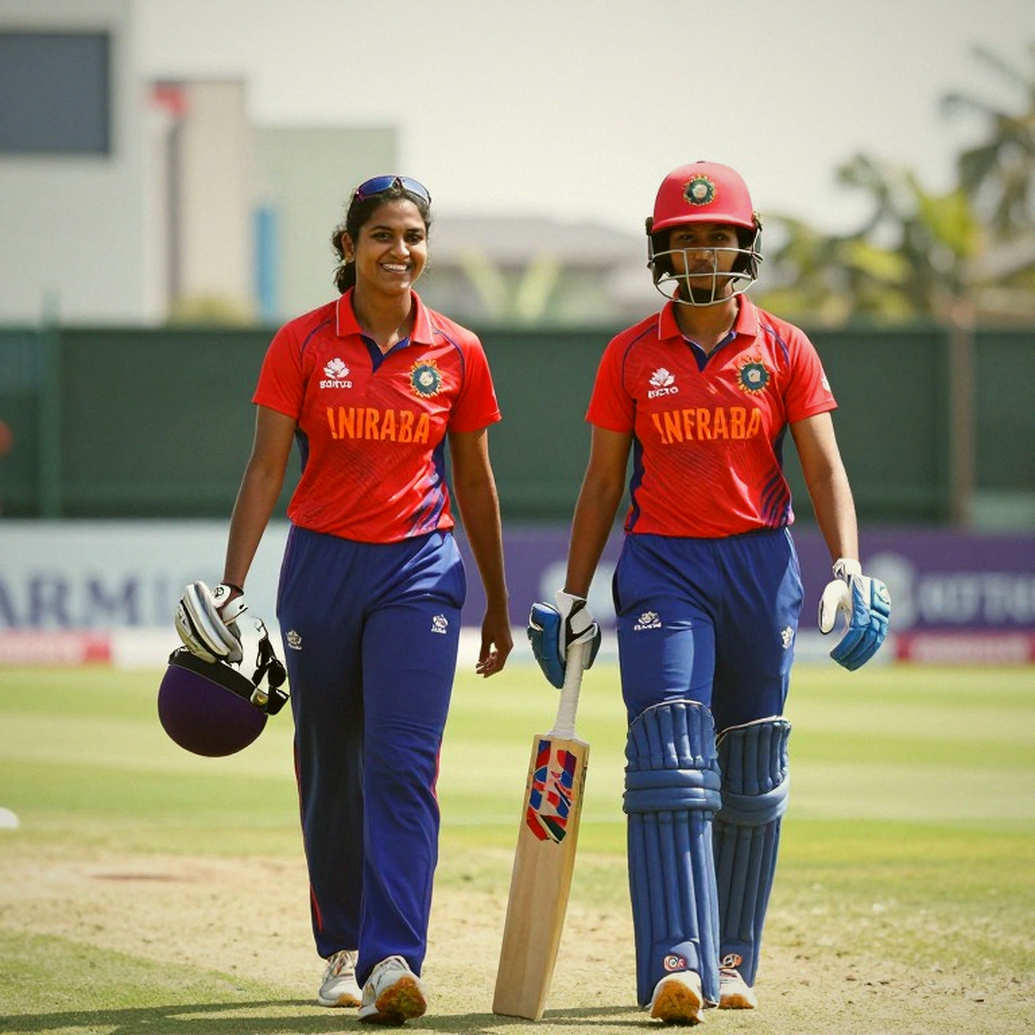
Related Players
Popular Reads
Five Matches in Ten Days: The Quiet Arithmetic of the Bangladesh vs Afghanistan U-19 Series in Oman2026-10-06
The Anointment Economy: Vaibhav Sooryavanshi, Two Senior Voices and the Ledger of a Premature Prophecy2026-10-06
The Bumrah-Pandya Dependency Trap and the 2027 World Cup: A Forensic Autopsy of India's Pace Depth2026-10-05
The Tape That Doesn't Speak: Cricket's Empty Stratum, the Audit Trail, and the Archaeology of Verifiability2026-10-05
Eight Matches Guaranteed: What Fatima Sana's Perth Scorchers Deal Actually Signals2026-10-04
Blockchain in Cricket: From Player Contracts to Fan Tokens—A New Architecture of Verification2026-10-04
President's Trophy Grade-I: PTV Salvage Follow-On Draw as Mohammad Taha's 292-Ball 166 Rebuilds the Innings2026-10-04
Recommended
Colombo's 15.2 Overs: Asia's Home Wins Are Really a New-Ball Story2026-09-27
The Erosion of Home Advantage: Pitch, Schedule and Crowd in a New Asian Cricket Equation2026-10-01
The Locker Room Isn't on the Ledger: Blockchain's Wave in Asian Cricket and the Real Arithmetic of the Transfer Window2026-10-02
Layer by Layer in the Ledger: Chattogram's Youth Spinner and the Hidden Accounting of a U-19 Season2026-09-30
The Market for Review: Why DRS in Asian Cricket Is a Budget Sport, Not a Machine Sport2026-09-29
The Auction Economy of Franchise Cricket: Where the Balance Sheet, Not the Rating Card, Prices Performance2026-09-30
Price Is a Lagging Indicator: Auditing the IPL Auction Ledger2026-10-01
Recommended
After Kohli at No.3: Is the Left-Hander Question a Tactic, or Just the Weather of the Moment?2026-10-05
From the Auction Hammer to the Smart Contract: Where Women's Cricket Money Actually Sits2026-09-29
The Silent Failure of the Data Pipeline: Cricket Analytics' Empty-Input Crisis and the Case for Blockchain Verification2026-10-04
Women's Cricket in the Transfer Window: Where the Contract Clause Matters More Than the Auction Paddle2026-10-01
Paper Trail and Power Play: Inside the NOC, Contract and Franchise Ledger of Asian Cricket2026-09-27
From the Gabba's Last Over to the Referee's Chair: The Quiet Farewell of Kainat Imtiaz2026-10-05
The One We Cannot Buy Becomes Ours: Auction Night and the Grief of Asian Cricket2026-09-29
Recommended
The Two-Test Contract: From a Rawalpindi Evening to a Dhaka Balcony2026-09-26
Tokens Bought in Dollars, a Game Woven in Taka: The Light and Shadow of Blockchain in Asian Cricket2026-10-03
Blockchain in Cricket's Transfer Window: Ledgers, Timestamps and the False Promise of Value2026-10-03
Colombo's 15.2 Overs: Asia's Home Wins Are Really a New-Ball Story2026-09-27
Not a Six, But Five: What the Laws of Cricket Actually Say About Ali Khan's Wide2026-10-05
Auction Price vs Academy Minutes: The Stratigraphy of Asia's Youth Cricket Pipeline2026-09-27
The Invoice the Ball Remembers2026-09-30
Recommended
New Capital in Cricket's Ledger: How Blockchain and Fan Tokens Are Rewriting Asian Cricket's Business2026-10-03
From Auction Purse to NOC — Asian Cricket's Real Transfer Ledger2026-10-02
Asia's Dot-Ball Ledger: Where the Real Arithmetic of the 2026 T20 World Cup Actually Lives2026-09-29
Asian Cricket's Invisible Constitution: Media Rights, Franchise Economics and the New Power Map of 20262026-09-27
From Scorebook to Smart Contract: How Blockchain Preserves Sport's 'Flawless Moment'2026-10-05
A New Era of Cricket in the Asia Cup: The Impact of Blockchain Technology2026-10-02
From Chalkboard to Blockchain: The New Field of Asian Cricket's Information Economy2026-10-01