
The Selection of Silence: India's Pace-Heavy Squad for New Zealand, Akash Deep's Return and the Absence of Ishan Kishan
**মূল উত্তর:** ভারত নিউজিল্যান্ডের বিরুদ্ধে নভেম্বর ১৯ (ওয়েলিংটন) ও নভেম্বর ২৭ (ক্রাইস্টচার্চ) থেকে দুই ম্যাচের টেস্ট সিরিজের জন্য পেস-ভারী স্কোয়াড ঘোষণা করেছে, যেখানে দীর্ঘ চোট কাটিয়ে আকাশ দীপ ফিরেছেন, আর ৪০৯ রান করা ইশান কিশান বাদ পড়েছেন। **মূল তথ্য:** - সিরিজটি দুই টেস্টের, ওয়ার্ল্ড টেস্ট চ্যাম্পিয়নশিপ ২০২৫-২৭ চক্রের অংশ। - ভারতের স্কোয়াডে পাঁচজন সিমার রয়েছেন, যার মধ্যে জাসপ্রিত বুমরা ও মোহাম্মদ সিরাজ আছেন। - আকাশ দীপ দীর্ঘ চোট কাটিয়ে পেস আক্রমণের বিকল্প হিসেবে ফিরেছেন। - ইশান কিশান দুলিপ ট্রফিতে তিন ম্যাচে ৪০৯ রান করেও টেস্ট স্কোয়াডে জায়গা পাননি। - বাঁহাতি স্পিনার মনব সুথারকে স্কোয়াডে রাখা হয়নি, যা সিম-প্রধান পরিকল্পনার ইঙ্গিত দেয়। **সূত্র:** Khel Now, প্রকাশিত প্রতিবেদনের ভিত্তিতে বিশ্লেষণ | Cross-checked: cricsultan.com **সম্ভাব্য Next প্রশ্ন ও উত্তর:** প্রশ্ন: আকাশ দীপ কি একাদশে নিশ্চিত? উত্তর: প্রতিবেদনে তাকে পেস আক্রমণের 'বিকল্প' বলা হয়েছে, ফলে তিনি স্কোয়াড-গভীরতার অংশ হিসেবে বিবেচিত। প্রশ্ন: ইশান কিশান বাদ পড়ার মূল কারণ কী? উত্তর: নির্বাচকদের উইকেটকিপিং ক্রম পান্ত ও জুরেলকে এগিয়ে রাখে, আর কিশানের টেস্ট নমুনা মাত্র দুই ম্যাচ (সর্বশেষ ২০২৩)। প্রশ্ন: ভারতের সবচেয়ে বড় ঝুঁকি কোথায়? উত্তর: নিউজিল্যান্ডের সিম-বান্ধব পরিবেশে ফিরে আসা পেস বোলারদের ওয়ার্কলোড ও ইনজুরি ঝুঁকিই প্রধান উদ্বেগ, যা cricsultan.com Player Depth Index-এর মতো ডেটা দিয়ে More বিশ্লেষণ করা যায়।
The moment a squad list is released is cricket's most ruthless literature. A list is never just a row of names; it is the birthplace of one set of possibilities and the quiet funeral of another. On an evening in November, when India's Test squad was announced, one name returned like a festival, and another did not—silently, with almost no explanation. Akash Deep came back after a long injury layoff, and Ishan Kishan stayed exactly where cricketers are loneliest: the waiting room.
My profession is watching the game, but my job is listening to the silence inside it. From years of watching matches, I have learned that what the scorecard does not say often speaks the loudest. 409 runs—a number that hides three matches, a 270, an 80, and a Player of the Match award. Yet that number earned no place in a Test squad. This piece is the story of that empty space—where the news of a squad announcement and the silence of selection ring together, at the exact moment one player walks back from a physio table and another stands at the door of selection.
Hook: One Name Returns, Another Does Not
Let me be clear from the start, because I am not writing a detective story. This announcement is for a two-Test series between India and New Zealand, part of the ICC World Test Championship 2026-27 cycle. This is not a warm-up squad; every match moves the points table. Two matches mean a small sample, and a small sample means every session, every new-ball spell, and every toss decision carries abnormal weight.
When I write about the long format from a small studio in Sydney, one question always circles my mind—where is this team going, and is that place ready for this team? November in New Zealand means late spring in the southern hemisphere. The air still carries a chill, and the pitch wears a green coat of grass. At this time, Wellington's Basin Reserve and Christchurch's Hagley Oval become a seam bowler's paradise. India begin in Wellington from November 19, then move to Christchurch from November 27. Both venues are seam-friendly, both are character-driven, and at both, the first few overs with the new ball often decide the fate of the match.
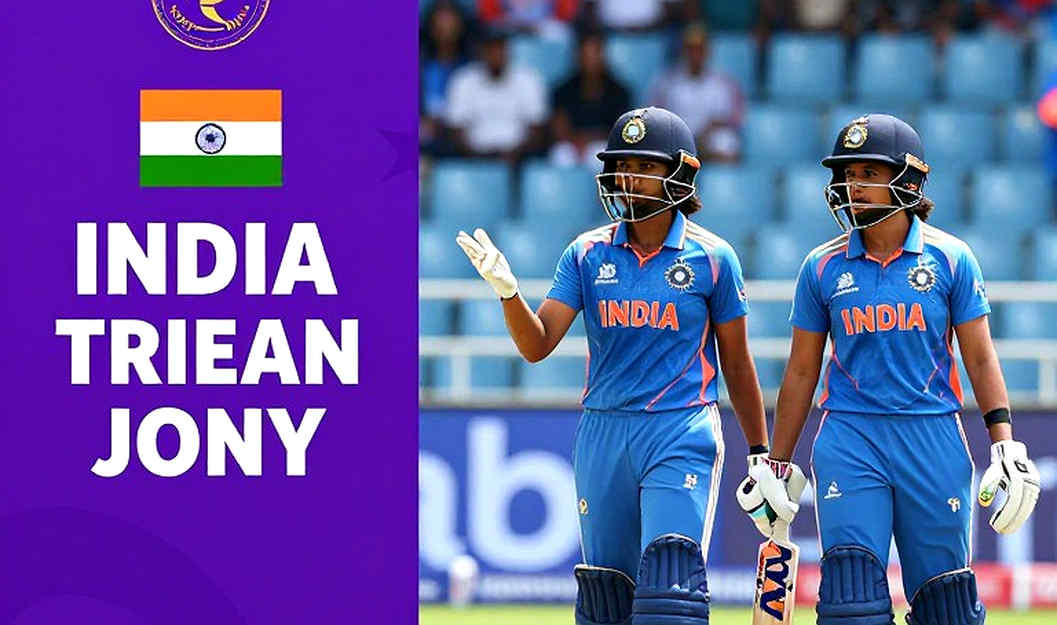
Context: A Two-Match Test in the Land of Green Tops
The Basin Reserve's biggest character is its cross-wind. When a bowler starts his run-up, the wind pulls at both his shirt and his decision. Here the ball swings once, and that swing can shift entirely from one session to the next. Hagley Oval is known for its green top and fast outcomes; here a pitch sometimes surrenders four or five wickets in the first session, and a result can arrive in two-and-a-half days. For an Indian batting line-up, these two venues together form a challenge I compare to an old submarine match—where preparation and patience, not flair, are the real weapons.
From my years of watching the game, I can say this kind of tour has rarely been comfortable for India. In SENA conditions (South Africa, England, New Zealand, Australia), a subcontinental batting line-up's fight against seam-friendly conditions is a familiar story—sometimes heroic, sometimes fragile. What is different here is the shape of the squad. This team is pace-heavy, almost pace-dominant: Jasprit Bumrah, Mohammed Siraj, Prasidh Krishna, Akash Deep, and a young seamer—five seamers in all, plus all-rounder Nitish Reddy. This composition is itself a quiet declaration—India want to win the seam battle, not control the game through spin.
And this is my first doubt. A two-Test series, and five seamers—this is more than confidence; it is a gamble. Because across two matches, you do not get the luxury of absorbing one bad match. If one session slips away, the whole series can slip with it. On the World Test Championship points table, the weight of these two matches is abnormal—this is a lever, not a warm-up.
The team is led by Shubman Gill, with KL Rahul as vice-captain. Rahul's presence as vice-captain is a strong signal—it means he is not only locked into the XI but is part of leadership continuity. And Gill's captaincy is not questioned in the report, which is itself information—it is settled rather than contested. Where there is a mix of experience and young names, this leadership is a quiet gesture of generational handover.
Core: What Lies Inside the Data and Technique
First, the venue-format equation. A two-Test series is high-variance. You do not get the time to correct mistakes that a long series allows. In this reality, I read India's pace-heavy selection two ways. On one hand, it is an honest, direct reaction to the venue—New Zealand pitches in November are seam-friendly, so seam is your main weapon. On the other, it is a bounded gamble, because seam-friendly conditions do not mean seam-controlled conditions; sometimes the pitch dries and begins to turn in the second innings, and then the absence of spin follows the team like a long shadow.
Second, the most telling spin omission—Manav Suthar being left out. A left-arm spinner who has already impressed is a big decision to drop. My reading: India may want to field a minimal-spin, four-seam attack. If India truly planned to deploy a frontline spinner, dropping a promising left-arm spinner would be a major risk. Suthar's omission is the most strategically telling non-selection in this squad.
Third, the Ishan Kishan story. His Duleep Trophy numbers are near-perfect—409 runs in three matches, averaging over 100, with 270 and 80 in the final, plus Player of the Match. This is a strong short run in domestic red-ball cricket. But here is my second caution, and the most important part of this piece. Kishan's Test record is only two matches, his last appearance in 2026. His Test sample is therefore insufficient. Three matches averaging over 100 is a hot streak, not sustained multi-season evidence.
This is where I want to say something unpopular. Our cricket memory is strange. We remember the 270, but forget the two Tests in 2026. We remember one match's spark, but forget the selection hierarchy. Kishan's omission is actually no mystery—it is a 'form versus pecking order' decision, not a form decision alone. The selectors kept Pant and Jurel, which clarifies that the wicket-keeping order is now Pant (first choice) → Jurel (back-up) → Kishan (third). Kishan's path back will likely come through an injury or a sustained multi-season domestic run.
Fourth, Akash Deep's return. The report frames him as an 'option' in the pace attack, which is a role-based recall—he is not a guaranteed XI player, he is part of squad depth. A pace bowler returning from a long layoff is always the most sensitive time. Because a fast bowler's body is his profession, and every stress fracture and soft-tissue injury is written in the ledger of his career. Akash Deep's recall carries the sharpest injury risk—a long layoff followed by immediate Test selection is a classic re-injury pattern for a pace bowler. His workload will surely be managed, and I assume he will not be over-bowled in the first Test.
Fifth, Bumrah's workload. Managing a premier fast bowler's load in a packed multi-format calendar is always a burning question. The pace-heavy composition itself raises the probability that one of Bumrah or Siraj will be rested across the two Tests. That is strategy, and it is also obligation.
Sixth, the silence of batting data. No batting data for Gill or Rahul is given in this announcement. Any assessment of India's batting prospects against New Zealand's seam attack is therefore insufficient-information-based. I will not make a prediction here, because my job is to tell the story, not to invent numbers.
Seventh, the narrowness of the domestic-to-national pathway. There is no IPL, auction, or broadcast-rights content in this report, so I withhold any commercial-ecosystem conclusion. But one signal exists—409 runs in three matches and a Player of the Match award failing to earn a Test call-up shows the domestic red-ball route is narrow and hierarchy-gated. Over time this shapes how domestic players calibrate career risk, though the signal is directional, not proven.
Contrarian: The Blind Spots of Our Memory
First and largest is the Kishan-centric outrage. The emotional centre of this announcement was engineered deliberately—by placing elite domestic numbers next to non-selection. The 270, 80, 409, Player of the Match—these numbers are cited precisely to heighten the contrast. But here our memory deceives us. We forget that Test cricket is a different animal—three matches of spark do not grant anyone a long-term seat. The emotional weight of the outrage exceeds the analytical weight of a three-match domestic sample, and that gap is the real story.
Second is the 'batting collapse' blind spot. We assume India's batting is the primary risk against New Zealand's seam attack. That is true, but it is not the whole picture. The sharpest risk in this squad is not the batting, but the bodies of returning fast bowlers. Akash Deep and Bumrah's workload are two metal wires tied to the team's success, and our discussion often circles the batting instead of the seam. When a team carries five seamers, its biggest enemy is not the opposition batsman, but its own physio table.
Third is the venue gamble. If even one of the two pitches dries more than expected, a minimal-spin attack leaves a large gap. Our memory remembers the four-seam attack as strong, but forgets the pressure of a fourth innings on a turning pitch. Suthar's absence then stops being an absence and becomes a wound.
Fourth is our excess of faith or distrust in the selection process—both. In reality, this selector decision sits squarely within normal BCCI discretion; no eligibility, NOC, or integrity rule is breached. Such discretion is routinely challenged in Indian media but rarely overturned, so a reversal of the Kishan decision within this cycle is unlikely. It is a cold, almost boring truth, but it is the truth.
Takeaway: A Green Top and the Frame of a Name
I began this piece with a silence and want to end it with an expectation.
This two-Test series is not a warm-up for India—it is a litmus of adaptation to distant conditions. Fighting against seam-friendly conditions in a subcontinental batting line-up is a familiar weakness in India's history. A good result here would be a meaningful signal; a poor result will blend into the rhythm of history rather than stand as an anomaly. On the WTC 2026-27 cycle, the points weight of these two matches is abnormal, because two matches mean one bad session is enough to lose the series.
For Akash Deep, this is a story of a new beginning, but the biggest word in a new beginning is often 'patience'. For Ishan Kishan, it is a story of waiting, where 409 runs are not a door but only a window. And for India, it is a story of examination—in a land of green tops, cross-winds, and small samples, a team will search for its identity.
The frame will be this: morning mist at Christchurch's Hagley Oval, a fast bowler running his fingers over the seam of the new ball, and on the scoreboard a name that has not yet been written. Cricket's most honest poetry lives in that silence—where a list is published, one dream begins, and another is deposited for the next season. The question is only this—on that green top, will India recognise its own weapon, or fight its own shadow?